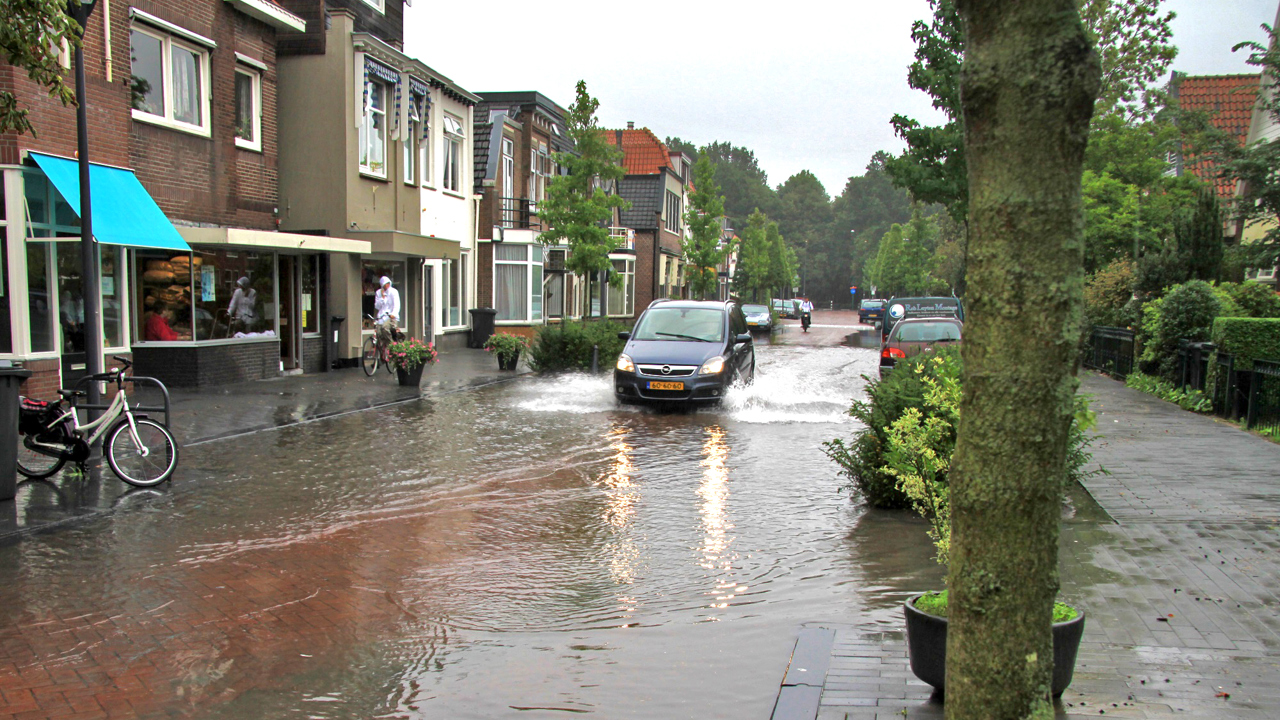
Our climate is changing. We notice this through more extreme weather such as heavy hailstorms, heavy precipitation or longer periods of drought. The increasing extreme weather is causing more nuisance and damage to individuals, entrepreneurs and companies. Think of flooded streets, houses and business premises due to too much precipitation in a short period of time. And everyone remembers the violent storm in January 2018, in which even roofs were blown off buildings. To help citizens and businesses prevent as much damage as possible caused by severe weather, we share prevention tips on this page.
Of course, preventing damage is always better than repairing. Take advantage of these prevention tips so that you are well prepared for severe weather. It saves you damage and hassle.
Check out the prevention tips for each type of weather:
Do you still have damage due to extreme weather? Please contact your insurance adviser or insurer as soon as possible. They will help you on your way and ensure a correct claim settlement.
By taking the right preventive measures, you can save your business damage and hassle caused by extreme weather. An example of this is a subscription to a weather station that warns of severe weather conditions far in advance. This allows you to take damage control measures in time.
In addition, make sure you have a (disaster) contingency plan. Investigate the risks your company runs and look for solutions such as fallback options, extra preventive facilities and make agreements in advance with suppliers, staff and the municipality.
Below are the prevention tips for entrepreneurs and companies, divided by weather type:
In the event of damage caused by extreme weather, contact the insurance adviser or insurer as soon as possible. But of course, prevention is better than cure.
In addition to the above tips to reduce the risk of damage from extreme weather, there are other useful tools in the field of spatial adaptation. In recent years, all kinds of organisations have developed tools. These initiatives are clearly displayed on the ruimtelijkeadaptatie.nl website. To give you an idea of the different initiatives, we highlight a few of them.
The National Climate Adaptation Strategy (2016) includes the consequences of climate change for four climate trends in four bubble schemes. In December 2018, the NAS adaptation tool was launched. With this interactive tool you can put together your own bulb schedule that suits your field of work or problem. Users can compile a selection of climate trends, sectors, impact and nature in three steps. For example, for heat and drought in infrastructure, energy and IT/Telecom.
The Climate Impact Atlas gives you a first impression of the (future) threats of flooding, waterlogging, drought and heat in your area. With the zoom function you have the opportunity to zoom in to your own municipality. Different map layers are available for each of the themes. For subsidence (the consequences of which are often not assured!), the Land Subsidence Map is also available.
Amsterdam Rainproof offers a toolbox with all kinds of concrete measures to be taken for buildings and grounds.
On the website of Techniek Nederland you will findtips to prevent flooding and water damage.
This brochure from the RIONED Foundation explains how the sewerage system works, how common problems arise and how they can be solved. Specially tailored to companies.
Amsterdam Rainproof provides a list of useful products in the event of flooding, such as temporary flood defences.
Would you like to know more about what the Dutch Association of Insurers is doing in the field of climate (change)? Then take a look at our Climate theme page.
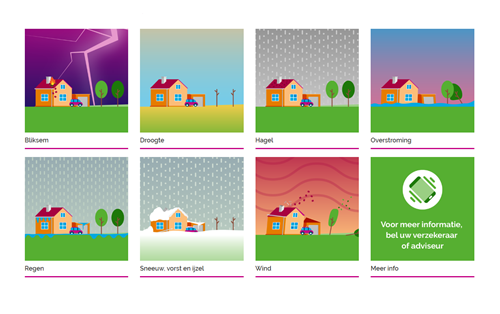
What damage caused by extreme weather is insured? And: what damage doesn't? You can see this at a glance in the Climate Risks Insurability Infographic.