De Rooij is a landscape architect at Wageningen University and has been active as a firefighter for over twenty years. While his corps is on standby to assist the wildfire in Limburg if necessary, he mainly sees a development that has been going on for some time. "For many people, this fire feels like a wake-up call, but actually we have already passed that point. Previous research has already shown that the number of wildfires is likely to double by 2050 compared to 2020. More importantly, the character of wildfires is changing."
Fires are becoming increasingly difficult to fight
According to De Rooij, wildfires in the Netherlands for a long time consisted mainly of fires in heathland, grass and low vegetation. They move with the wind and are relatively easy to predict.
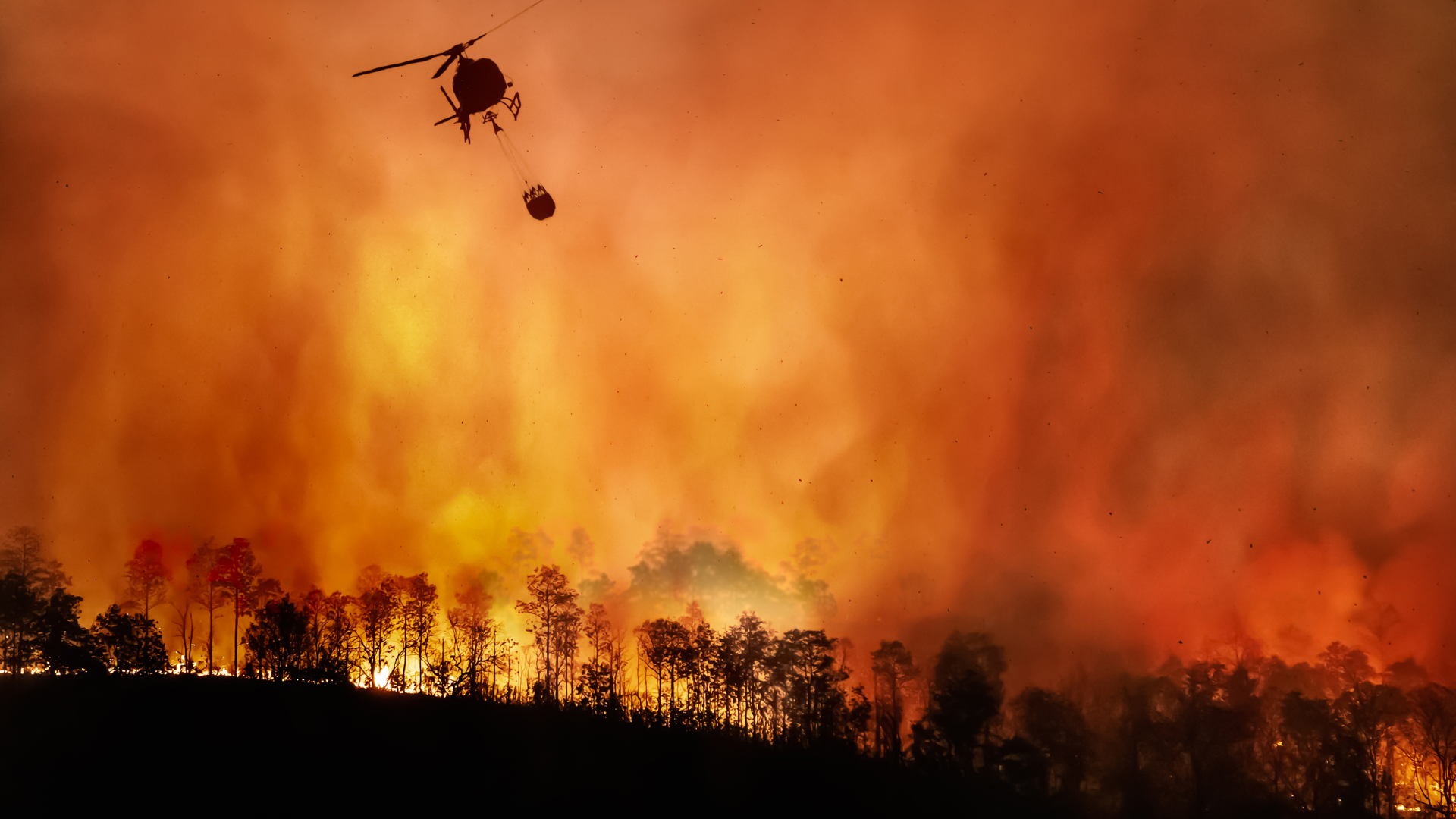
The situation changes as soon as the fire spreads to tree crowns. "Then a so-called crown fire occurs. Much more energy is released, which means that much more extinguishing water is needed and the fire is much more difficult to control."
The current drought plays an important role in this. Due to the fourth heat wave of this year, many forests are extremely dry. Young pines in particular catch fire quickly and can spread the fire to other trees at lightning speed. In addition, there is a risk of flying fire, with burning parts causing new fires tens to hundreds of meters away. As a result, the fire brigade must constantly think ahead: how will the wind develop, will the weather change and what measures are needed to prevent expansion? Sometimes it means that trees at the edge of the forest actually have to be pruned or intermediate vegetation has to be removed to limit the amount of combustible material.
"The fire brigade must constantly think ahead: how will the wind develop, will the weather change and what measures are needed to prevent expansion?
Area-specific approach
According to De Rooij, the key lies not only in firefighting, but especially in wildfire control. You can't prevent fires, but you want to keep them manageable. He supports the area-specific approach, which looks at how the risk of uncontrollable wildfires can be reduced for each nature reserve.
This can be done, for example, by:
• to install less fire-sensitive plants;
• strategically use walking or cycling paths as compartment boundaries;
• prevent "fire escapes" (the transition from low vegetation to the crowns);
• improve accessibility for emergency services;
• have sufficient extinguishing water supplies available.
This is especially important in a densely populated country like the Netherlands. "In Canada and Australia, nature reserves are much more extensive and fewer people live. In our country, you can immediately see the social impact. In Limburg, a holiday park has been evacuated and a railway line has come to a standstill. The fire is literally getting close."
Prevention as a possible part of the acceptance policy at insurers
De Rooij: "Insurers must ensure that living in or near nature reserves remains insurable in the future, but under clear conditions." According to him, insurers can make prevention a more emphatic part of their acceptance policy. This certainly applies to private forest owners. About 40 percent of the Dutch forest is in private hands. "The question is: do private owners do enough maintenance, fire prevention or rather wildfire control measures? As an insurer, you want to have insight into this and start a conversation about it."
"Insurers can make prevention a more emphatic part of their acceptance policy"
The reinforcement of the fire belt at the Welna estate in the Veluwe


More insight thanks to damage data
According to De Rooij, a second contribution that insurers can make in 'the fight against the fire' lies in data. Although it has been estimated that the direct deployment of the fire brigade will amount to at least ten million euros annually in the coming years, much insight is still lacking into the total economic damage of wildfires. "We actually don't know enough about the indirect damage. Think of evacuations, halted train traffic, recreation companies closing or damage to homes and businesses. Insurers have valuable claims data that can help to better visualise that social impact."
According to De Rooij, this data is not only important for policymakers, but also to increase social awareness. In addition, insurers could take a critical look at their own portfolio. Are existing products still in line with a future in which wildfires occur more often and cause greater damage? Which preventive and wildfire control measures can be encouraged? And how do homes and businesses in the vicinity of a nature reserve remain insurable in the longer term?
Learning to live with fire
According to De Rooij, wildfires will become part of the new reality. Just as the Netherlands has learned to live with water, government, residents and organisations will also have to learn to deal with fire. That is why the fire brigade works together with countries such as Spain to gain knowledge about wildfire management.
The programme Stronger Together against Wildfires is also running, in which the government, the Netherlands Institute for Public Safety, the Royal Netherlands Meteorological Institute (KNMI) and Wageningen University & Research, among others, are working together on a national approach. According to De Rooij, insurers emphatically belong at the table. "We want to avoid uninsurability. That is precisely why we now need to think about prevention, risk management and cooperation. This is the only way we can limit the impact of wildfires in the future."
(Text: Christel Dieleman, photos: Gerrit Veldman VNOG)
Reading tips: Insurance and drought
What is insured in the event of damage due to drought? Check out the Infographic on insurability of climate risks from the Association in collaboration with the Ministry of Infrastructure and Water Management.
More information can also be found in the article More drought, more risk: wildfires and insurance in the Netherlands.
In the piece Forest fires on holiday: what can you do and what are you entitled to? more information can be found about forest fires abroad.